When choosing material for furniture, modular kitchens, or wardrobes, one question always comes up:
👉 HDHMR vs MDF – which is better?
Both are engineered wood boards. Both are widely used in interior design. Both look similar from the outside.
But when it comes to strength, moisture resistance, screw holding, durability, and price — they are very different.
If you are planning a kitchen, wardrobe, office furniture, or commercial project, this detailed SEO-optimized guide will help you choose the right board.
Let’s break it down clearly.
What Is MDF?
MDF (Medium Density Fibreboard) is an engineered wood panel made by compressing wood fibres with resin under heat and pressure.
It has:
- Smooth surface
- Uniform structure
- Medium density
- Budget-friendly pricing
MDF is mainly used in:
- Bedroom furniture
- Decorative panels
- TV units
- Wall panelling
- Office partitions
It is popular because it is affordable and easy to work with.
What Is HDHMR?
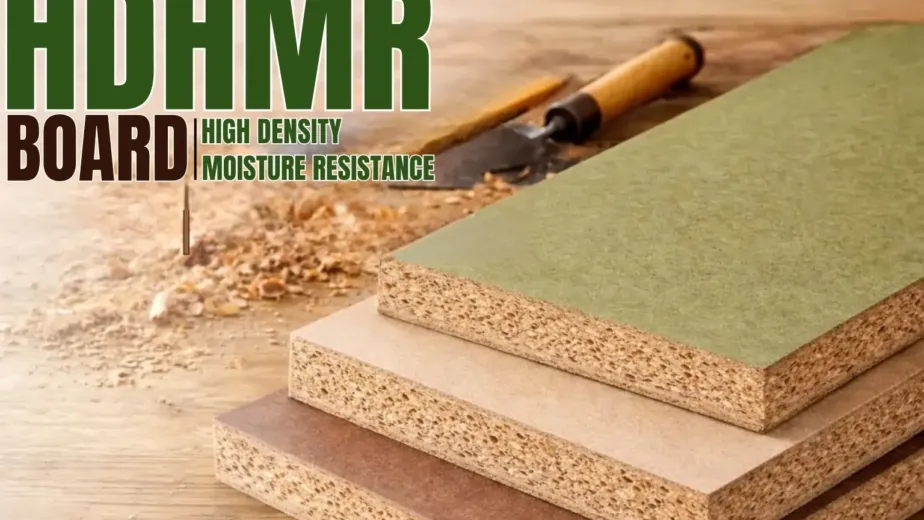
HDHMR stands for High Density High Moisture Resistant board.
It is an upgraded version of MDF with:
- Higher density
- Better moisture resistance
- Stronger screw holding
- Better durability
HDHMR is commonly used in:
- Modular kitchens
- Wardrobes
- Office furniture
- Commercial interiors
- Moisture-prone areas
It is more expensive than MDF but offers better performance.
HDHMR vs MDF – Quick Comparison Table
|
Feature |
MDF |
HDHMR |
|
Full Form |
Medium Density Fibreboard |
High Density High Moisture Resistant |
|
Density |
Medium |
High |
|
Moisture Resistance |
Low (MR grade available) |
High |
|
Strength |
Moderate |
Strong |
|
Screw Holding |
Average |
Excellent |
|
Surface Finish |
Very Smooth |
Smooth |
|
Weight |
Lighter |
Heavier |
|
Price |
Budget |
Mid-range |
|
Best For |
Dry areas |
Kitchens & humid areas |
Now let’s compare them in detail.
1️⃣ Density & Strength Comparison
The biggest difference lies in density.
- MDF density: approx. 600–800 kg/m³
- HDHMR density: approx. 850–950 kg/m³
Because HDHMR is denser:
- It is stronger.
- It holds screws better.
- It lasts longer.
If you’re building heavy cabinets or modular kitchens, HDHMR wins.
For light decorative furniture, MDF works fine.
2️⃣ Moisture Resistance – Which One Handles Water Better?
This is where HDHMR clearly outperforms MDF.
MDF:
- Swells quickly if exposed to water.
- Edges get damaged in humidity.
- Not suitable for kitchens or bathrooms.
HDHMR:
- Special moisture-resistant resin used.
- Can handle kitchen humidity.
- Less swelling compared to MDF.
Important:
HDHMR is moisture-resistant, not waterproof.
If your area has heavy water exposure, marine plywood is better.
3️⃣ Screw Holding Capacity
Cabinet hinges, drawer channels, and hardware depend on screw strength.
MDF:
- Screws can loosen over time.
- Not ideal for heavy-duty fittings.
HDHMR:
- Strong internal bonding.
- Excellent screw grip.
- Suitable for modular kitchen hardware.
If longevity matters, HDHMR is safer.
4️⃣ Surface Finish & Workability
Both materials offer smooth surfaces.
MDF:
- Very smooth.
- Excellent for paint.
- Perfect for PU finish.
HDHMR:
- Slightly denser surface.
- Great for laminate.
- Strong bonding strength.
For decorative painted furniture, MDF is excellent.
For structural laminated furniture, HDHMR is better.
5️⃣ Price Comparison (India 2026)
Prices vary by brand and location. Below is the approximate price range for 8×4 ft sheets.
MDF Price Per Thickness
Thickness | Approx Price (₹ per sheet) |
6 mm | ₹1,000 – ₹1,400 |
9 mm | ₹1,400 – ₹1,900 |
12 mm | ₹1,900 – ₹2,500 |
16 mm | ₹2,600 – ₹3,200 |
18 mm | ₹2,900 – ₹3,800 |
25 mm | ₹4,200 – ₹5,500 |
HDHMR Price Per Thickness
Thickness | Approx Price (₹ per sheet) |
6 mm | ₹1,600 – ₹2,200 |
9 mm | ₹2,300 – ₹2,900 |
12 mm | ₹3,200 – ₹3,800 |
16 mm | ₹4,200 – ₹5,000 |
18 mm | ₹4,500 – ₹5,800 |
25 mm | ₹6,500 – ₹8,000 |
6️⃣ Cost Difference Example (18 mm Sheet)
Average price comparison:
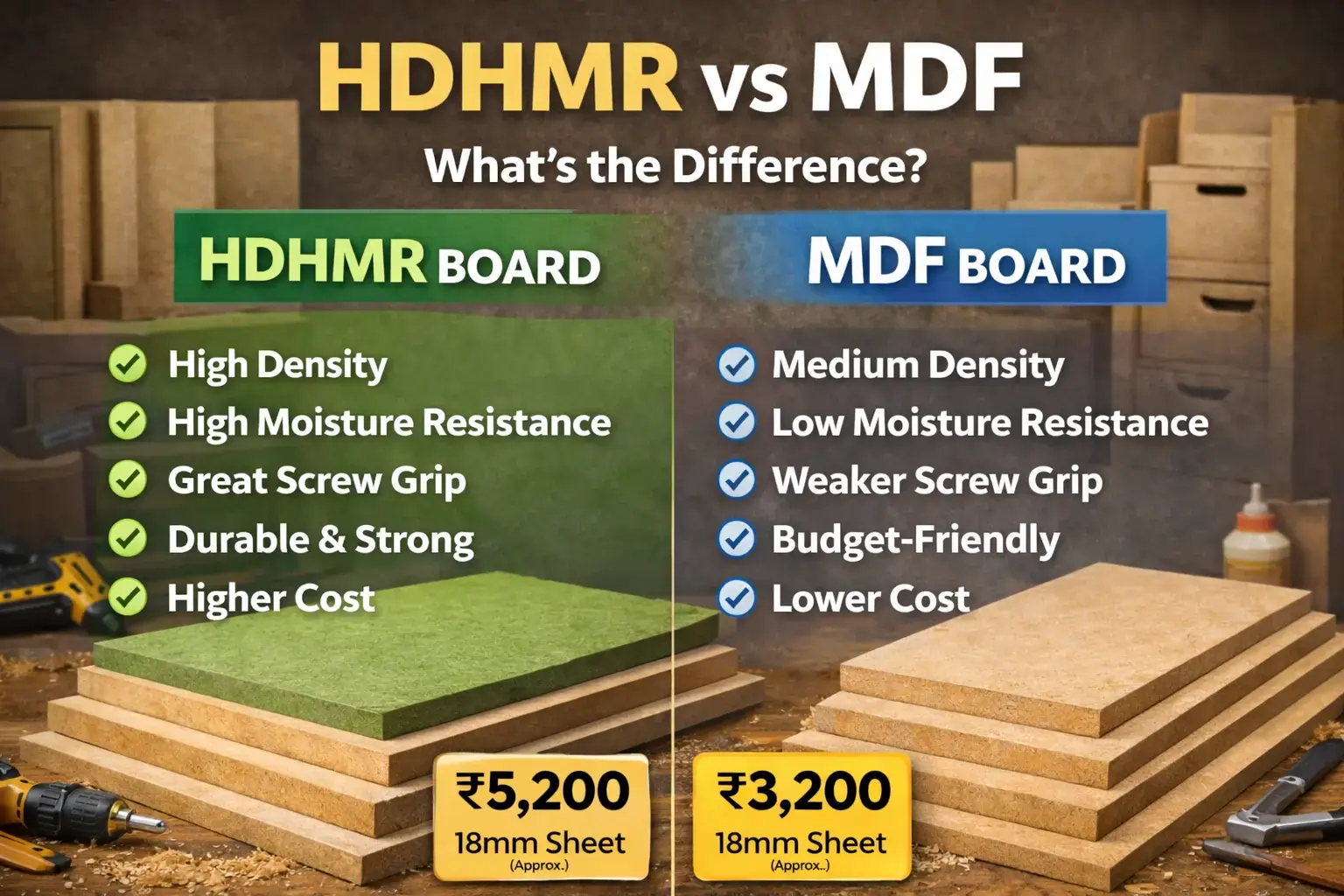
- MDF (18 mm): ₹3,200
- HDHMR (18 mm): ₹5,200
Difference: ₹2,000 per sheet
If a kitchen requires 15 sheets:
MDF total: ₹48,000
HDHMR total: ₹78,000
Difference: ₹30,000
However, HDHMR may last 5–8 years longer in kitchen conditions.
7️⃣ Durability & Lifespan
Material | Average Lifespan |
MDF | 8–12 years |
HDHMR | 15–20 years |
Proper installation and edge sealing can increase durability.
8️⃣ Where to Use MDF?
Choose MDF if:
✔ Budget is limited
✔ Furniture is for bedroom or living room
✔ Decorative panelling is required
✔ Painted finish is needed
✔ No moisture exposure
9️⃣ Where to Use HDHMR?
Choose HDHMR if:
✔ You are building modular kitchen
✔ Area has humidity
✔ Strong screw grip is needed
✔ Long-term durability required
✔ Budget allows mid-range investment
🔟 HDHMR vs MDF for Modular Kitchen
For kitchen base cabinets:
MDF ❌ Not recommended
HDHMR ✅ Recommended
For kitchen shutters:
MDF (with laminate) ✔ Possible
HDHMR ✔ Better option
For wardrobes:
Both can work, depending on budget.
1️⃣1️⃣ Advantages & Disadvantages
MDF Advantages
✔ Affordable
✔ Smooth finish
✔ Easy to machine
✔ Good for decorative work
MDF Disadvantages
❌ Low moisture resistance
❌ Weak screw holding
❌ Shorter lifespan
HDHMR Advantages
✔ High strength
✔ Moisture resistant
✔ Strong screw holding
✔ Long-lasting
✔ Ideal for kitchens
HDHMR Disadvantages
❌ Higher price
1️⃣2️⃣ Final Verdict – Which One Should You Choose?
The answer depends on your project.
If you want:
- Budget furniture → Choose MDF
- Kitchen durability → Choose HDHMR
- Long-term investment → Choose HDHMR
- Decorative painted panels → Choose MDF
In simple terms:
👉 MDF = Budget & Decorative
👉 HDHMR = Durable & Moisture Resistant
Conclusion
When comparing HDHMR vs MDF, the key difference lies in strength and moisture resistance.
MDF is affordable and suitable for dry indoor applications.
HDHMR is stronger, more durable, and ideal for modular kitchens and humid areas.
If budget allows, HDHMR is a smarter long-term investment.
But if you are working on a tight budget and the area is dry, MDF is perfectly acceptable.