When you are designing a bedroom, choosing a wardrobe may not seem like a big decision at first. You might spend more time thinking about the bed, wall colours, lighting or flooring. But once you start using the room every day, you realise how important the wardrobe actually is. One of the most common questions people face is whether they should choose sliding doors or traditional hinged doors. The sliding wardrobe vs hinged wardrobe decision is not just about which one looks more stylish. The type of door you choose affects the space around your wardrobe, how easily you can reach your clothes and how comfortable the room feels in everyday use.
Both options have their own advantages. A sliding wardrobe can work really well when bedroom space is limited, while a hinged wardrobe gives you easy access to almost the entire wardrobe at once. So, instead of choosing only based on looks, it makes sense to understand how both designs actually work in a bedroom.
Sliding Wardrobe vs Hinged Wardrobe: What Is the Main Difference?
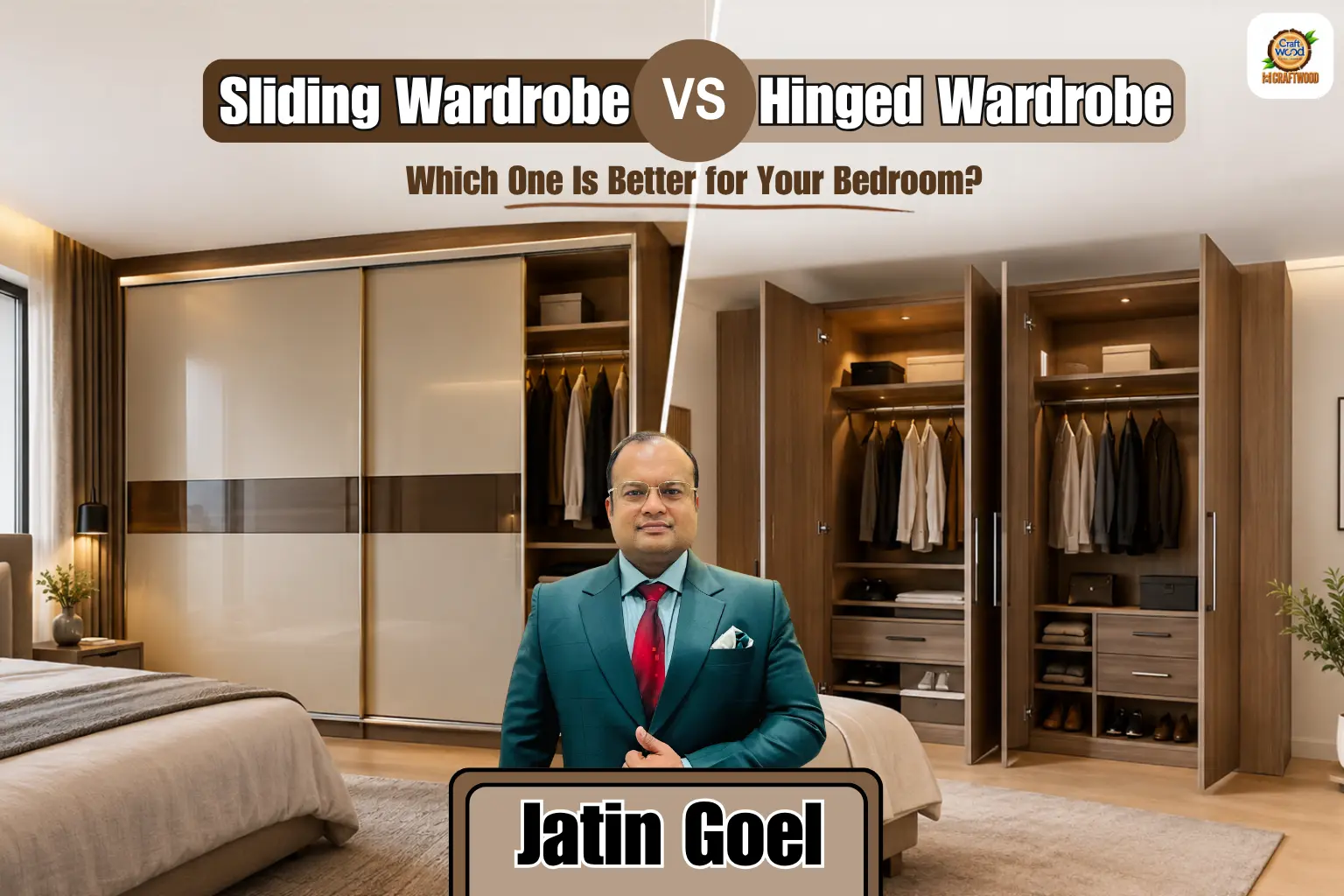
The biggest difference is simply the way the doors open. Sliding wardrobe doors move sideways along a track. When you need something from one section, you slide the shutter across to reach it. Since the doors don’t open towards you, they don’t take up extra floor space. Hinged wardrobe doors work like normal doors. They are attached to the wardrobe with hinges and open outward.
This might sound like a very small difference, but it becomes important when you have limited space between your bed and wardrobe. Imagine your bed is placed quite close to the wardrobe. If you have hinged doors, you need enough room to open them fully while still having space to stand in front of the wardrobe. Sliding doors don’t create the same problem because they remain within the wardrobe area.
However, hinged doors have their own advantages. You can open multiple doors together and see a much larger part of your wardrobe.
Which One Is Better When Bedroom Space Is Limited?
If you have a small bedroom, every bit of floor space matters. The bed itself already occupies a large part of the room. Add side tables, a study table or a chair, and suddenly there isn’t much free space left. This is where sliding wardrobes become useful. Because their shutters move sideways, you don’t have to keep additional space empty just to open the wardrobe. You can stand relatively close to it and still access your clothes comfortably. This can be especially useful in apartments where bedrooms are compact. That doesn’t mean hinged wardrobes are unsuitable for small rooms. If the wardrobe has narrow shutters and the room has been planned carefully, they can work perfectly well.
Still, when looking at sliding wardrobes vs hinged wardrobes specifically from a space-saving point of view, sliding shutters generally have the advantage.
What Kind of Look Do You Want for Your Bedroom?
Looks are obviously a personal choice. Sliding wardrobes often have larger shutters, which can give the room a cleaner and more modern appearance. Because there are fewer visible divisions, the wardrobe can almost feel like part of the wall. You can use wood finishes for a warm look or combine them with glass for something more contemporary. Mirrors are also a practical option, particularly in smaller rooms. A large mirror doesn’t just save you from adding a separate dressing mirror. It can also make the bedroom feel more open. Hinged wardrobes offer a different kind of flexibility. Since the wardrobe is divided into separate shutters, you can experiment with handles, colours, grooves, patterns and different finishes.
Neither style is automatically more attractive. A simple hinged wardrobe can look better than an expensive sliding wardrobe if it suits the rest of the bedroom. The important thing is to choose a design that feels like it belongs in the space.
Sliding Wardrobe vs Hinged Wardrobe for Daily Use
This is something worth thinking about because you’ll probably use your wardrobe several times every day. With sliding shutters, one door usually moves in front of another. So when one section is open, another section will remain covered. For everyday use, this isn’t necessarily a problem. You can arrange frequently used clothes in easily accessible sections. But imagine you’re getting ready for an event and want to look through several sections at once. You may have to keep sliding the doors from one side to another. With hinged doors, you can simply open multiple shutters together.
You get a wider view of your clothes, shelves and drawers without moving doors back and forth. If easy access to the complete wardrobe is important to you, this is one area where hinged wardrobes feel more convenient.
Your Internal Storage Matters More Than the Door
People often focus so much on the exterior design that they forget about the inside. But think about it: most of the actual usefulness of your wardrobe comes from what’s behind the doors. Before deciding the layout, look at the clothes and belongings you actually have. If you wear a lot of shirts, jackets or dresses, you’ll probably need more hanging space. If most of your clothes are folded, extra shelves may be more useful. You may also need drawers for accessories, a separate shoe section, space for bags or an upper compartment for suitcases and seasonal clothes. Both sliding and hinged wardrobes can be customised around these needs.
So in the sliding wardrobe vs hinged wardrobe debate, don’t assume that one automatically gives you better storage. A well-planned smaller wardrobe can sometimes be far more useful than a bigger wardrobe with a poor internal layout.
Which Design Works Better for Modern Indian Homes?
There isn’t one answer because Indian homes come in very different sizes. A compact apartment bedroom has completely different requirements from a large master bedroom in an independent house. For smaller bedrooms, sliding doors can make best and practical sense because they don’t interfere with the area in front of the wardrobe and it is best for room. In a larger bedroom, however, saving a few inches of opening space may not matter much. In that situation, hinged shutters can be extremely convenient because you can open several sections together.
Your lifestyle should also influence the decision. For example, if you normally open one section, grab your clothes and close it again, sliding doors probably won’t bother you at all. But if you like looking through different outfits while getting ready, you may appreciate the wider access that hinged shutters provide. This is why it’s better to think about your daily routine instead of simply choosing whichever design is currently popular.
Sliding Wardrobe vs Hinged Wardrobe: Which Is Easier to Maintain?
A wardrobe is something you expect to use for years, so maintenance matters too. Sliding wardrobes depend on tracks and rollers. Over time, dust can settle inside the track. If it isn’t cleaned occasionally, the doors may not move as smoothly as they used to. Hardware quality also makes a big difference. A good sliding system should move smoothly without feeling unusually heavy or making unnecessary noise. If poor-quality rollers or tracks are used, the experience can become frustrating after regular use. Hinged wardrobes have a simpler mechanism.
A hinge may become slightly loose or misaligned after years of use, but it can usually be adjusted or replaced without too much trouble. Whichever design you choose, don’t ignore hardware quality just because it isn’t immediately visible. The finish is what you notice when you look at the wardrobe. The hardware is what you’ll notice every time you use it.
Is a Sliding Wardrobe More Expensive?
Not always.
Wardrobe pricing depends on many things: size, material, finish, hardware, drawers, accessories and installation. Sliding wardrobes require tracks and rollers, so their hardware system can add to the overall price. If you choose large mirrors, glass shutters or premium finishes, the cost can increase further. Hinged wardrobes mainly use a simpler opening mechanism, which can make them more budget- friendly in certain cases.
But that doesn’t mean every hinged wardrobe will be cheaper. Add premium finishes, high-quality hinges, drawers, organizers and accessories, and the cost can rise quickly. When comparing sliding wardrobe vs hinged wardrobe based on price, don’t just compare two final numbers. Check what you’re actually getting for that money. What board material is being used? Which hardware is included? Are drawers and accessories part of the quotation? Does the price include installation? These details give you a much better idea of the actual value.
What About Long-Term Durability?
A wardrobe doesn’t become durable simply because it has sliding or hinged doors. Material quality and workmanship matter just as much. In a sliding wardrobe, the tracks and rollers handle movement every time the doors are opened. Good-quality hardware and correct installation therefore become important.
Hinged shutters rely on individual hinges. Heavy shutters may need occasional adjustment over time, but individual hinges can usually be replaced if required. The board material, edge finishing and installation also affect how well the wardrobe performs over the years. So instead of asking only which opening system lasts longer, look at the complete wardrobe.
Don't Choose Your Wardrobe Only from a Photo
It happens all the time. You find a beautiful wardrobe design online and immediately think, “This would look perfect in my bedroom.” But the room in that photograph might be much bigger than yours. Maybe their bed is further away from the wardrobe. Maybe they don’t need as much storage. Maybe the wardrobe has been designed around completely different requirements. That’s why measurements should come before design. Check the distance between your bed and wardrobe. See whether an open shutter would block your walking space. Think about where drawers will open and whether you’ll be able to stand comfortably in front of them. Then think about your belongings.
Where will your everyday clothes go? Where will you keep luggage? Do you need a separate section for shoes? How much hanging space will you actually use? These aren’t exciting design questions, but they make a huge difference once you start living with the wardrobe
Sliding Wardrobe vs Hinged Wardrobe: Which One Should You Finally Choose?
If your bedroom is compact and the wardrobe sits close to your bed, a sliding wardrobe will usually be easier to work with. You don’t have to worry about doors opening into the room, and large shutters can create a neat, modern appearance. If you have enough room in front of the wardrobe and like having several sections open at the same time, hinged doors may suit you better. They also give you more freedom when it comes to individual shutter designs and handles. So there isn’t really a single winner. Also, see our Instagram page to learn about our work
Conclusion
The sliding wardrobe vs hinged wardrobe choice becomes much simpler when you stop asking which design is “best” and start asking which one makes sense for your bedroom. A wardrobe should look good, of course. But it also needs to work comfortably every morning when you’re getting ready and every evening when you’re putting things back.
Start by measuring your room. Think about what you need to store and how you normally use your wardrobe. Then look at the design, materials, hardware and finishes. If space is tight, sliding shutters are often a sensible choice. If you have enough room and want easier access to the complete interior, hinged shutters can be hard to beat. Trends will keep changing. A wardrobe that genuinely fits your room and your routine will remain useful long after those trends have moved on. To also learn about modular furniture vs. carpenter-made furniture, read our other blog